From Your Weekly Stronger · August 31, 2026
Tip of the Week
Do power work while you are fresh
Perform power exercises near the beginning of your workout, after a gradual warm-up. Use a light load, complete only a few crisp repetitions, and stop the set when your speed or control begins to fade.
Your 3-Step Power Check
- Warm: Finish a gradual warm-up and make sure your shoulders, hips, and knees feel comfortable.
- Fresh: Begin while your breathing is controlled and before strength or cardio work makes you tired.
- Ready: Try one practice repetition with a light ball. Continue only if it feels quick, smooth, and pain-free.
Why Power Matters
Strength is your ability to produce force. Power is your ability to use that strength quickly. You use power when you swing a golf club, push off to reach a pickleball shot, serve a tennis ball, or change direction at the net. The same quality helps you stand up promptly, climb stairs, lift a bag into the car, and react when your balance shifts. Practicing quick, controlled movements helps train power for both recreation and everyday life.
Exercise of the Week
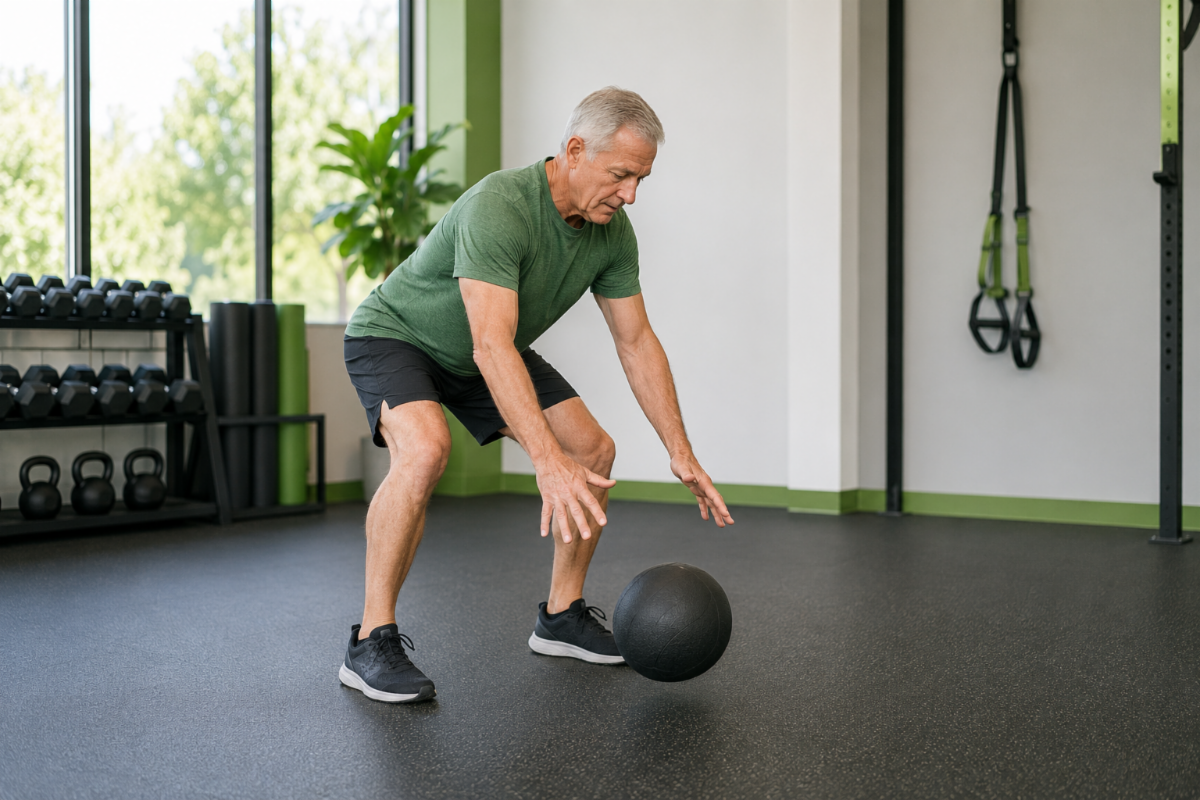
Ball Slams
Use a light, soft, non-bouncing slam ball and a floor designed for slamming. If this movement is new to you, learn it with a trainer first.
How to Do It
- Stand with your feet about shoulder-width apart and hold the ball with both hands.
- Brace your middle and bring the ball overhead only as high as comfortable. Avoid leaning backward.
- Slam the ball straight down in front of your feet as you bend your knees and hips.
- Let the ball settle. Pick it up using your hips and knees, stand tall, and fully reset before the next repetition.
Five Rules for Better Power Training
Start light: Choose a ball you can move quickly while staying in control.
Keep reps crisp: The goal is speed and quality—not exhaustion.
Reset each time: Take three to five seconds to regain your posture and breathing.
Rest fully: Allow 60–120 seconds between sets so every repetition can stay powerful.
Stop before fatigue: End the set if the ball slows down or your form changes.
Make It Easier
Use a lighter ball and begin from chest or face height instead of overhead. Practice the pattern slowly before adding speed.
Ready to Progress?
Increase your speed or comfortable range before adding weight. Only progress if every repetition remains crisp and controlled.
This Week's Challenge
Two short power sessions
After warming up, complete 2 sets of 3–5 crisp ball slams. Fully reset between repetitions and rest 60–120 seconds between sets.
Safety First
Use a non-bouncing ball, a slam-approved floor, and plenty of clear space. Stop for pain, dizziness, chest pressure, unusual shortness of breath, or loss of balance. If you have osteoporosis, a history of spinal fracture, or shoulder or back pain, ask your healthcare professional or trainer for an appropriate alternative.
Put it into practice with your trainer
Bring your questions to your next session, explore personal training at Saddlebrooke Strength, or schedule a free introductory call.